TG has always walked the line between idealism and realism in an absolutely fascinating way, and it’s one of the main things I adore about this series. Both of these themes are explicitly explored through the characters of Furuta and Kaneki, and the reason people are not happy with what has been done with them is not because “I just hate Kaneki but Furuta’s an angel who deserved none of this,” (I LOVE Kaneki) it’s because the themes, depending on the person, may not have been satisfactorily addressed.
The series’ ending conclusion is that it tries to bring these two disparate pieces together in a way that was framed peculiarly, and because of that framing the message ultimately comes across as simplistic and, to some, confusing, because textually, it’s simply inaccurate to say Kaneki fought tragedy but Furuta did not. Instead of emphasizing individual responsibility and choices, the story seems to have emphasized choices made by others.
(It’s great that some find 177 optimistic, and this is not an attempt to convince people it’s not optimistic, but to explain that, even though we all agree Ishida was trying to send a hopeful message, many of us came away with the opposite message instead. It’s not correct to say that the message Ishida intended to say is the message he actually sent, nor is it correct to say that he did not send that message.)
We all know that TG wants us to live. It’s the most powerful line of the series imo: live, even if it’s not stylish.
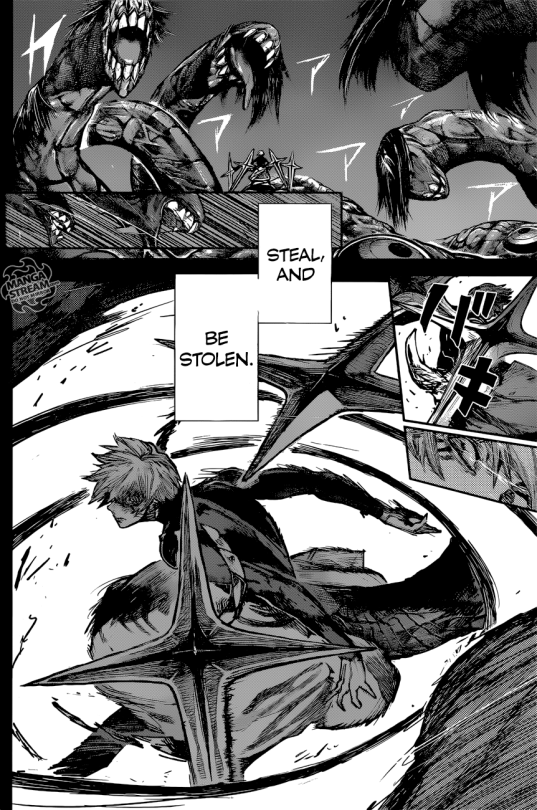
That’s idealistic, and optimistic. Hence, the series sets up an expectation that it will deliver on this front. And in many ways it does just that. Even when things look hopeless, like when Mutsuki spirals, or when Urie frames out, or when Kaneki breaks into Dragon, these three characters are rescued by their loved ones, rescued from themselves. That’s beautiful.


 Cadet-For-Your-SpaceRescue